


Chaosium’s Basic Roleplaying
I own a lot of different games which use Chaosium’s Basic Roleplaying, or BRP as it came to be known. My first was Call of Cthulhu, and more would follow steadily over the years. This overview is partly about that, and partly about the system as it is presented on the page.
Auspicious Beginnings
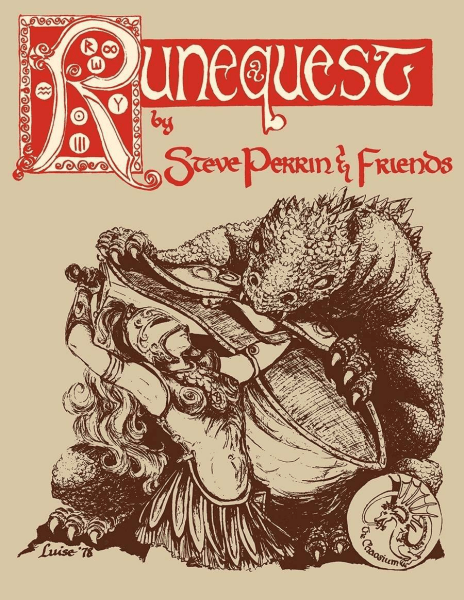
First appearing in RuneQuest in 1978, BRP started making waves. As an RPG system, it was not the first out of the gate and though early as these things seem now, Chaosium can also be seen has having taken time to reflect on what was needed in a text for what could then be more easily seen as an activity in its own right – separate from the similar games and activities which had come before. In design, the creators could benefit from seeing the effects of the approaches taken by those who preceded them, on their own play and learn of the play of others. They had time to read those games and reconsider how it might be framed and explained. More than this, they had their own experiences to draw upon and what those experiences had taught them about societies, the search for the mystical, the urge toward and the consequences of violence. RuneQuest reflected all of this and spoke to those who found it and subsequently spread it.
Important Context
When I look back on the first edition of RuneQuest, one thing that makes me smile is how the team of writers and designers at Chaosium in 1978 managed on the very first page of text in their fledgling RPG (page 5) to discover what would somehow become a sort of missing grail object in the many works from many companies which would follow. That page quickly deals with four important considerations:
- What is an RPG?
- What is this RPG about?
- How to use these rules
- Further rules
There was an uncommon amount of uncommonly good sense in that team, on that page, and in the pages which followed.
Malleable, Flexible, yet Powerful
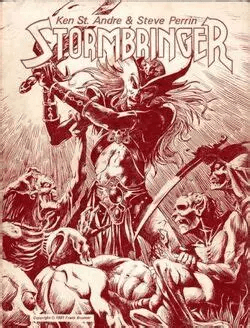
Over the years, BRP was, as the writers had promised on that page in 1978, used for a variety of other games ranging from licensed fantasy and SF properties in Stormbringer and Ringworld, through adaptation of the largely unremembered Lovecraft circle into the first horror RPG and adaptation of the literary traditions of Arthur into the groundbreaking icon of an RPG, Pendragon. Among all of this creativity there was still room left to cause Superheroes to explode from Worlds of Wonder and Superworld while gamers far and wide turned the BRP system to whatever their hearts desired.
We make much these days, while seemingly taking it for granted, of companies which produce a bespoke version of their house system for each new genre and subgenre of game that they release. Notable among these is Modiphius with its 2D20 system and Free League with its Year Zero. That idea, however, was firmly in evidence in the early days of the hobby with systems like BRP, HERO, and later GURPS, providing different paths to doing it well.
What was so special about it?
Preference is a funny thing, but for many people, BRP hits a precise point where it makes a clear and resonant kind of sense. It is grounded in the experience of being human and the underpinning logic of the imaginative worlds we create. It surges with brutal magic and the even more brutal harm people can inflict upon each other – and receive in turn. It finds ways to make risk easy to run yet pleasantly agonizing to choose. It has a lot to say about who the characters we play are, yet has the room to listen to our ideas as well. It is incredibly responsive to the ongoing events of play and characters change in surprising and satisfying ways as they make their way through imagined situations to realize our shared goals. It has a boldness about how it limits characters to a human mold, yet expects better of them. Anyone can be a hero, the pages of BRP whisper, they just have to act… well.
By the time that 2008 rolled around, the value of a collected set of the various rules, concepts, and approaches which had appeared in all of these publications was obvious and the response to the Big Gold Book put together under the revising eyes of Jason Durall and Sam Johnson was positive. Why? Partly for the convenience of having so many options organized neatly in one place, but also because it wasn’t just a box of tools cut and pasted from various places. As Chaosium had done from the start and as the authors of the collected Basic Roleplaying continued to do, the text explains the ideas behind the rules, uses plain terms, and expects the reader to experiment and make up their own minds.
Like the authors of RuneQuest did, the authors of the Big Gold Book managed to elucidate something very important. They managed to hit a very important note that is often lost in the rush to use whatever word will work well enough in the moment, but fails when examined. Where most in RPGs would rush to use the word ‘authority’ when explaining the separate spheres of influence in which the GM and Players operate during play, BRP wisely indicates this is not authority at all, but responsibility. We, as players of a game, come together in play and must depend on one another for that time to be satisfying, meaningful, and/or fun. We have a duty to facilitate that outcome for the group. From that shared responsibility flows the taking on of roles and perspectives about the game and its various participants and elements to make that responsibility a reality. We can only speak about who is empowered to make a particular decision over a particular thing at a particular time, when we first understand the nature, source, and direction of that empowerment. The Big Gold Book makes that very clear and does so on pages 7 and 8.
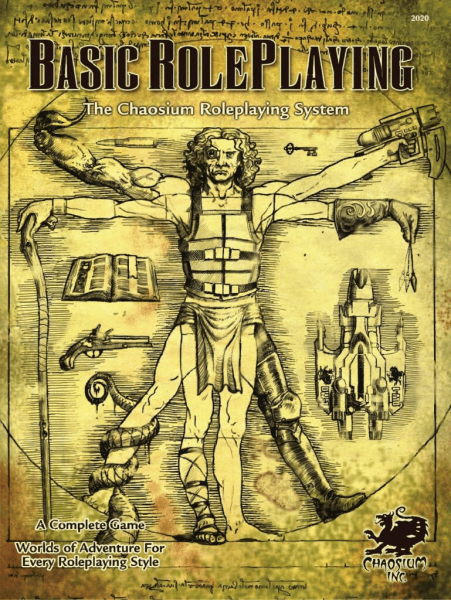
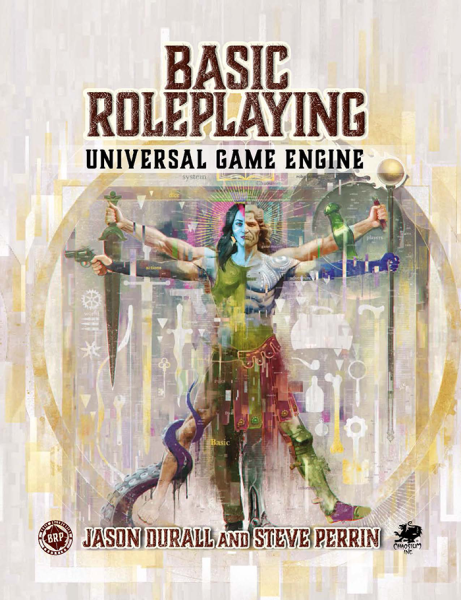
Some of my questions when I learned that the BGB of BRP would be revised in a new edition in 2023, were whether those authors would return and in either case, would this important note remain a part of the text. Jason Durall did indeed return, and so too did the sections on Player and GM responsibility – now on page 2. Much in the original book returned with it, with a lot of familiar phrasing, though in a smaller font which is not entirely due to my aging eyes. Like with that opening example of RuneQuest benefitting from the time between its release and that of the first RPG, the new edition of the stand along Basic Roleplaying rulebook has benefitted from the intervening years. Where the first was aware and had some lines to spare for the different ways people conceive of and play their characters and the shared worlds in which they are imagined to act, react, and interact, the new edition manages to squeeze in a few more, with greater awareness. For example, it manages to find acceptance for play centered consciously for Story-as-Product and for Story-as-Byproduct without smearing either side, and it embraces both the values of the Resistance Table and the values of Opposed Rolls. It’s a wonder – it is worlds of wonder in a relatively small page count for such potency.
How does it work?
Ultimately, BRP rests its foundation on players understanding how likely something is in the form of a percentage chance. This communicates the personal nature of risk for the characters and allows for the tongues of greed and reward to lure some players to opt into danger and some into racing to the local Human Resources center for some assistance. Through the quick and fluid use of d%, with occasional use of other dice to inflict damage or determine a hit location, the game world – whatever it might be – can be made to quickly coalesce into a vibrant, responsive, believable, and appropriately consistent imagined place with little to distract the Players, or their GM from what is going on therein. It can also do so without sacrificing the enjoyment that comes from operating a smooth and powerfully-running engine.
So… you like it, then?
It is safe to say that I rate BRP very highly. It rides high in my estimation. It is lauded and bedecked in praise, by me. It is the system which I have known and run regularly for the longest period. It is one of two mainstays in my practice of creating settings for the groups I play in (the other being Ubiquity). It is one of only a few systems which I keep up to date and run regularly in different iterations or editions. In this case, I enjoy and find reasons to use various editions of Call of Cthulhu, Pendragon, and the masterfully-presented Mythras and Delta Green rather than brewing up my own stew of inclusions and exclusions, foundations and variations to use for everything of the BRP lineage.
I enjoy it as it was, as it is, and as it can sometimes be.


 Casting Shadows
My primary experience with BRP was when my brother and I played Stormbringer back in the 90s. Great system, very intuitive. And Stormbringer itself was a hoot, so many Elric locations and people, and magic weapons were made by binding demons to them. Good times.
If we cannot bind demons to items, can we even truly say we are roleplaying? ;)