


Rivers of London: ‘Tis the Season for Novellas
This is part three of a series exploring the source material from The Rivers of London novels by Ben Aaronovitch which inspired and supports a streamlined BRP roleplaying game by Chaosium. The motivation behind the series is to explore approaches to playing the game, and to inspire gamers to look past the upbeat and humorous writing, punctuated by police procedure and magical action, to find the beautiful and moving moments of perhaps unexpected potency which make the books stand out. The combination, if grasped and brought into a game, is killer. In part one, we conducted an egregiously quick overview of the premise and matched that with an equally speedy overview of the game. In part two, we zoomed through the first three novels with unseemly haste. In this third installment, the five novellas currently available at the time of writing are up for interrogation in the Achieving Best Evidence suite and if they allow themselves to aid the police in their inquiries, might be rewarded with some brawn sarnie or cheese and pickle sandwiches. Their choice.
The Novellas
I am looking at the novellas at this point in this series mainly because they are worth reading and it is nice to read them in the chronological order the author has been kind enough to make evident. Being novellas, they are not always on the series list of books, and so can at times, slide under the radars of new readers. With that in mind, I thought I would bring them up before dealing with the next batch of novels. Also, as novellas, they are quick and more directed through a specific case or event than the novels have to be, but do not lack for character, asides, and those special moments this series is ultimately about.
The first novella stands out from those which follow in several ways, so it has a somewhat singular nature. If, in your gaming group, there were a person who does not mind minor spoilers, is unlikely to read for pleasure but will read for preparation, and is going to be in your next thrilling Rivers of London campaign, I would recommend The Furthest Station as the short work from which they could glean the feel of the series and its major characters without unduly taxing themselves with the thought of a whole series of 10+ books and other shenanigans. A single, interesting, sometimes poignant sometimes flippant novella is not too much of a burden, surely.
Of course, ideally, they will enjoy it so much they will start reading the series – or at least a few. Right?
The other four (at least at time of writing) are a sort of sequence in their own right, though each is a stand-alone work featuring a different point-of-view character who is not Peter Grant. Each of these novellas takes their theme from a season of the year, hence, there are four. The first in order in regard to the ongoing story of Peter Grant is for summer and focuses on Abigail. Autumn, of course, follows summer and gives us a new character’s perspective on how a foreign power handles magical affairs (and what he thinks of the Folly). Winter then descends with some action and chaos in another foreign land but from the PoV of a character who will be familiar from guest appearances earlier in the novels. Finally, spring arrives and with it, a look at a time before the first novel, and a time before Nightingale was the last active member of his (or any) cohort serving the nation. Some might leap at the chance to look at this one first, but I think it matters to let DCI Thomas Nightingale establish weight and understanding in the reader’s mind as he is presented in the series before looking into his past – not least because it’s a novella which doesn’t have nor use the page count to contextualize things a reader with some fluency in the setting will already know.
Let’s begin, shall we? Be sure to turn your phone off. There might be some magic afoot.
Novella 1: The Furthest Station
In this novella, set between the fifth and sixth novels, Police Constable and Apprentice Wizard Peter Grant gets some time away from property damage, meddling practitioners of magic, obvious crime scenes, and dealing with a wide variety of ‘beings’ he does not fully comprehend. Instead, he and his soon-to-be-apprenticed cousin Abigail (who has her own novella described below) have a curious mystery to solve which involves the rolling stock of the London underground… or does it?
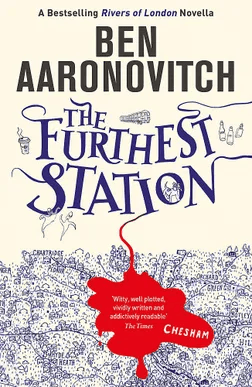
For those who want to be slowly steeped in the lore and mysteries of the setting, reading the series in order is perhaps the best way to do so, though the author has taken pains to ensure that each of the early novels can be read on their own and each of the later ones is at the very least self-explanatory. This novella is one which contributes to a greater understanding and appreciation of later entries like the novels False Value and Amongst Our Weapons, though is not essential to their comprehension.
This is a moody novella for various reasons, and further exposes Peter’s growing need to liaise with other departments as one of only two “Falcon Capable” (read: expressly trained in magic) officers… so far. Familiarization courses and open channels of communication have been established, but if a wizard is called for, there are but two names on the call sheet. One of Peter’s talents, however, is networking and bringing his contacts together. This is an aspect of the Folly’s operations in the modern era which this novella highlights nicely. It also has some clear and cool delineation of duties and power between Peter and his boss, Nightingale.
Importantly for this series of blog posts, there are moments throughout the book where that profoundness of the world unfiltered by Peter’s glibness and protectiveness, is revealed. Moments of memories lost, moments of identity both asserted and faded, and at least one contemplation of what, if anything, lies beyond the shroud of death.
‘Tis the Season – Four Novellas…
For these four works, we leave the perspective of Peter Grant behind and see the world through other eyes, and most of the time in other places.
Novella 2: The October Man
Everything changes with this novella, though it also reveals certain fundamentals which look different in this new location, but are indeed the same. In this novella we are in the PoV of the sole apprentice in Germany’s version of the Folly, Tobias Winter. His autumn is marked by a challenging investigation into an unusual death which may…or may not… have been a murder. There are family histories involved, old loves, betrayals, lies, and reversals of fate and fortune which at first blur the trail, then define it.
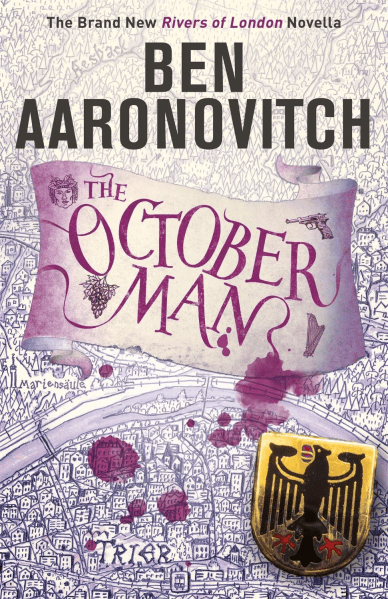
This novella is many things, and one of those most relevant to this post is that it is an interesting and useful blueprint for involving people who are not Peter Grant and Nightingale into the larger framework of the demi-monde inside and outside of London – or the UK, for that matter.
I quite like the character of Tobias Winter and the partner he gets assigned during the case. They aren’t just copies of Peter and crew with German accents. The way they work and how they are supported are refreshingly different in ways which shed good light on the setting as a whole.
Novella 3: What Abigail Did that Summer
The next novella has an immediacy in its telling which separates it in style of retrospective narration compared to we get from both Peter and Tobias. From a certain point of view, this novella might seem more like a YA entry into the series and not just because the PoV character is a teenager – and one with quite an attitude at that. The author takes pains not to write about Abigail from his perspective but to put us right into her thoughts as he does with all of his other characters – using his penchant for useful research to help sell that. For all of that, it covers moments of real risk and sharp, painful moments of honesty (in the safety of her own head) which Abigail deals with unflinchingly – for the most part. This is a good mystery, a tale of new friendships and old wounds, and a window into how those on the periphery of Peter’s deeper forays into the demi-monde experience the changes that brings.
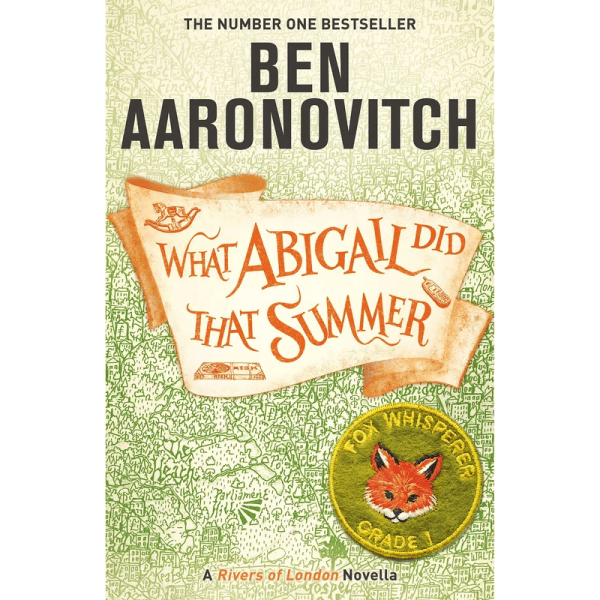
This novella was released after The October Man, but is set before it and before Furthest Station. In a sort of fun conceit, it took some time for the other characters to even realize that something had happened that summer and even longer for the official archivist of the Folly in general and Nightingale in particular, Professor Harold Postmartin D.Phil, F.R.S, to pry the investigation notes from her to store in his files with some amusing dialect annotations. (For those wise enough to include the audiobooks in their libraries along with the text versions, the lauded Kobna Holdbrook-Smith voices those annotations as asides from the very talented narrator for Abigail, Shvorne Marks.
One might think that with the younger PoV character, the season of summer, and the funny fox on the cover that there might be a dearth of profound moments.
One would be wrong.
Human experience is one thing all humans have in common. Abigail’s age does not protect her from it, not does the author feel the need to shield the reader from his characters. One of the hallmarks of the series is the way that Aaronvitch manages to make the experiences of others clear and real in personally meaningful ways, before tucking those away again under the quick pace and witty banter. However, once revealed, they remain with us to color that banter with the truths hidden beneath.
Novella 4: Winter’s Gifts
This fourth novella gives us the PoV of another familiar character, FBI agent Kimberley Reynolds. Unlike our previous encounters with Agent Reynolds, we are neither in the UK nor on Zoom, but instead on her turf – more or less.
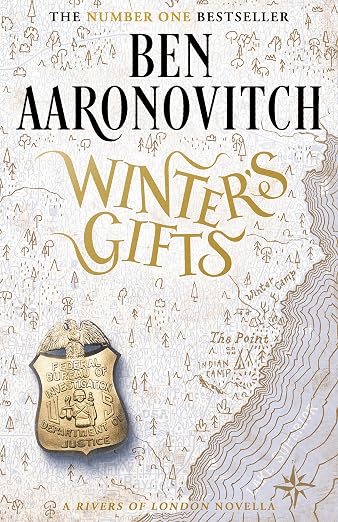
Like The October Man, this novella lets us see a bit of how magic and the supernatural intersects with government oversight in the United States. As we have seen from this character from first meeting her in Whispers Underground, she is both complex and willful. Settling into her PoV gives us a lot of insight into why she is that way, and gives us cause to feel concern for her given the chaotic state of magical affairs in her homeland we have seen hinted at in earlier books. Hints which are confimed in this one.
Chaosium has been able, of course, to coordinate with the author and produce a sourcebook which supports the US as a setting with its competing and separate organizations, and its variations and derivations on magic.
Through Reynold’s eyes, however, we are faced with questions of professional ethics and personal ones. We have questions of faith, and deep considerations of guilt – both individual and far broader than that. All of this is wrapped in a mostly cheerful private reflection that highlights the separation between how Agent Reynolds faces the world and the reasons why she faces it that way.
We also get insight into an older mystery which matters in deepening the understanding and import of clues uncovered in the novel Lies Sleeping. Perhaps most importantly, we see the simmering threat of powers and personalities oppressed for generations, finally having the wheel turn in their favor.
Novella 5: Masquerade of Spring
The last of the currently available novellas is, in terms of chronology, much earlier than the others. As noted above, however, we recommend saving it for nearer the end of the series, such as just before Amongst Our Weapons or just after it. Like Winter’s Gifts, it is set in the US, but this time it is New York during the Roaring ’20s. We meet a new PoV character whose flamboyance and thoughtless bravery are an interesting foil for the presence of a legitimately young Thomas Nightingale who, having been born in 1900, is in the first flush of his full manhood… for the first time. Both Nightingale, and his reluctant recruit and former schoolmate, Augustus Berrycloth-Young are practitioners of magic, free of encumbrances, full of the folly of youth, and come to be embroiled in a bizarre mystery that wends its way from an enchanted sax through matters of sex to quests for new lives. It’s that spring theme, you know. It gets the sap running.
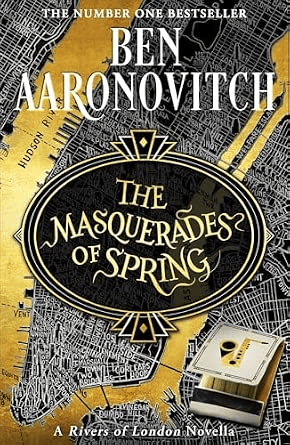
This novella too has profound moments, some very subtle and gone in a phrase, and others more direct and blunt than some eras have allowed. Lest we head into another era like that it is good to get all the reminders we can of the struggles of others before those struggles take root in our own lives. If we live to experience the hatreds of the past born anew, we have only ourselves to blame.
Among the several moving themes explored in this work, there is an intertwining of duty and friendship which, I think, matters a great deal – and not just in sick and cowardly times like this one.
The Game
Taking these five novellas together, as a sort of Rosetta Stone to use in deciphering the game is not at all what I would recommend. Last week’s post covers that approach, and the material in the core book itself is more than fit for that purpose in lieu of reading the first three novels.
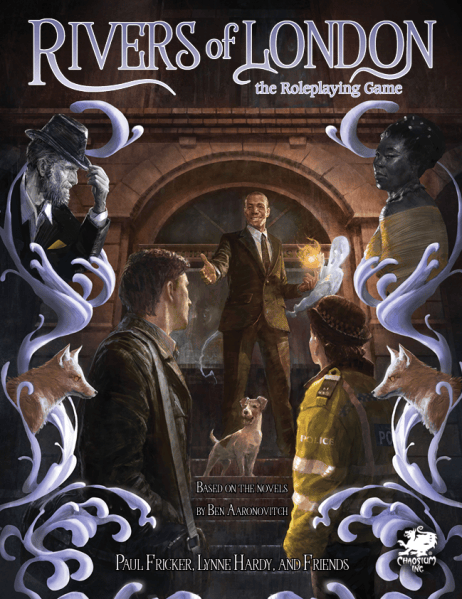
What I do recommend them for is broadening the group’s understanding of the setting once everyone is familiar with playing the game and all the fundamental specifics of Rivers of London which that entails. Just at the point where people have a grasp on what magic is like, how much investigation and police procedure they enjoy, and which aspects of the demi-monde they might like to explore, it’s an ideal time for these novellas, or a GM empowered by having read them, to inject some of their influence into the group’s version of the world.
Not all characters are brash like Peter, nor are many as potent as Nightingale. Everything Peter wants to accomplish in the books in regard to expanding and modernizing the Folly is in effect to open its point of view to include those of ‘other stakeholders moving forward’ and to modernize it before it’s too late. Those who do not learn their history are doomed to repeat it, as we can see so painfully clearly these days. What these novellas help show is the world of the series through others’ eyes. We see it before magic faded and after it bloomed again. We see it through the eyes of the bold, the eyes of the young and hopeful, the eyes of faith, and the lens of science. We see it as passion, as fear, as a job, and as a lifetime’s pursuit. We see obsession, duty, tradition, habit, and simple momentum.
It is from among these different perspectives and more that the new apprentices, associates, consultants, and standard officers attached to the Folly are drawn. These novellas are part of the broader world view that the Folly’s expansion suggests. They are fuel for the imagination of character, of relationships, of past experiences, and future dreams.
Apart from that, they are just good fun to read.
This series of posts?
What this series of posts I hope highlights, is that the alchemical mixture of our own play in the mortar of the books’ moral questions and personal consequences, stirred with the pestle of RPG action and wit, enables us to make the game great when we play it.
Subsequent posts in this series will focus on one or more of the novels, some useful material for gaming in those novels, and a nudge toward and hint about those moments of profundity we talked about throughout each entry.
You can find Part 1 here and Part 2 here. Part 4 will appear on Sunday, September 27th.
Until then, Dear Reader, take care~

 Casting Shadows